
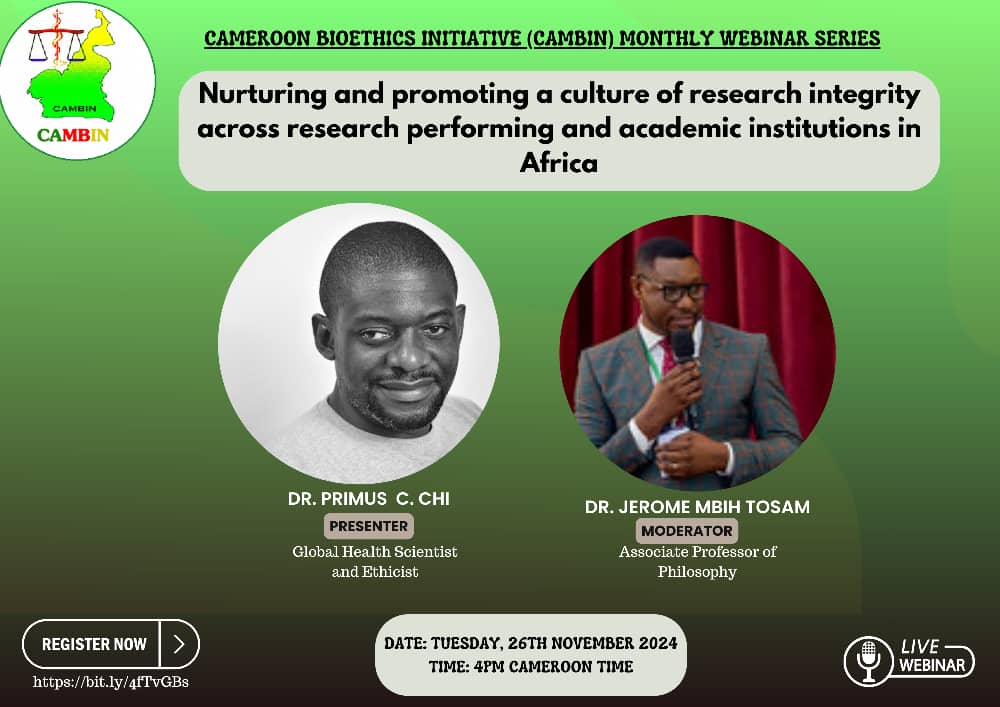
CAMBIN Webinar : Nurturing and Promoting a Culture of Research Integrity in Academic Institutions
 Introduction
This webinar, organized by CAMBIN focused on the crucial topic of research integrity in Africa. Dr. Primus C. Chi, a Global Health Scientist and Ethicist with extensive experience, presented on the importance of fostering a culture of research integrity in academic institutions on the continent.
Key Points
- Importance of Research Integrity: Dr. Chi highlighted the importance of research integrity for researchers, institutions, and society as a whole. It safeguards research quality, maintains public trust, fosters investment in science, protects reputations, and prevents harm to participants.
- Key Principles and Responsibilities: The discussion delved into the five key elements of research integrity: honesty, rigor, transparency, respect for participants, and accountability. Emphasis was placed on the Singapore Statement on Research Integrity, outlining responsibilities for researchers like maintaining accurate records, data sharing, and adhering to regulations.
- Promoting Integrity: The webinar explored strategies to promote research integrity. Establishing dedicated research offices, building the capacity of ethics committees, and incorporating research ethics training across universities were identified as crucial steps.
- Research Integrity Resources: Dr. Chi showcased free online resources for research ethics and integrity training. He emphasized the distinction between research ethics and integrity, with ethics forming a component of overall integrity.
- Challenges and Opportunities in Africa: While some African institutions have embraced research integrity principles, many lack necessary infrastructure and resources. Opportunities for improvement include:
- Building capacity in AI and open access requirements.
- Implementing mechanisms to detect and address research misconduct.
- Fostering community engagement and co-creation in research.
- Rewarding institutions with best practices in research integrity.
- Addressing the objectification of communities in research ethics frameworks.
Key recommendations
- Research institutions should implement clear policies, procedures, and training programs to cultivate a supportive environment for research integrity.
- Universities can integrate research integrity and ethics training across all levels of study, from undergraduate to PhD.
- African institutions need to develop guidelines and build capacity for addressing the ethical use of AI/LLMs in research.
- Funders could consider waiving open access publication fees for researchers from low and middle-income countries.
- Research teams should actively involve community members in study design and implementation.
- National Academies of Sciences or Ministries of Education can play a crucial role by developing national guidelines on research integrity.
- Institutions should explore broader evaluation criteria for researchers beyond just publications and funding.
Conclusion
This webinar served as a valuable platform for discussing the importance of research integrity in Africa. By implementing the presented recommendations and utilizing available resources, the African research community can foster a culture of integrity, build trust, and advance responsible research practices.